
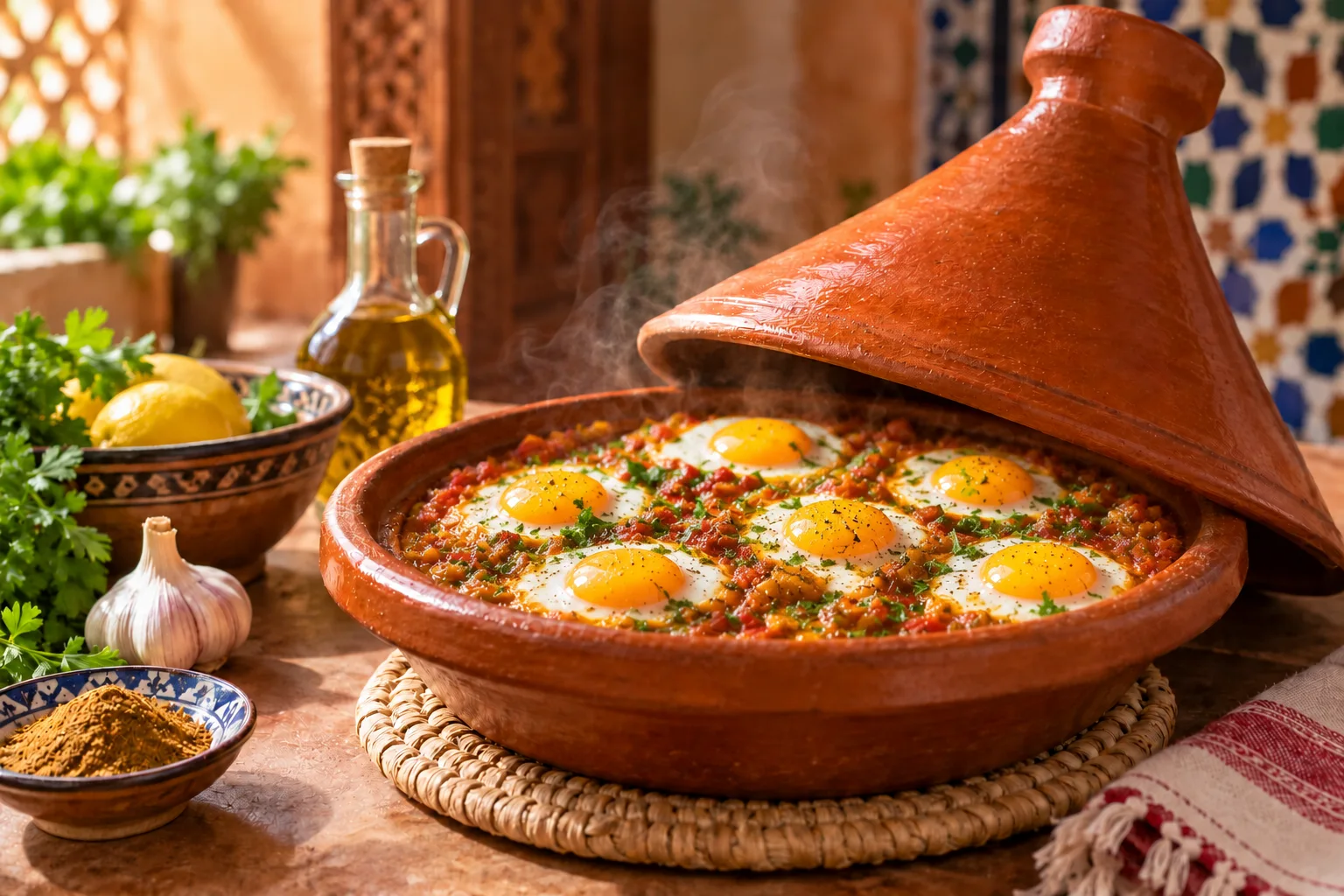
A tagine is one of the pieces of Moroccan cookware that looks simple until you start using one regularly. The wide clay base holds the food while the conical lid keeps much of the steam inside, but the way the pot is chosen, prepared and handled matters just as much as the ingredients that go into it.
In Morocco, I would not choose a tagine only because it looks beautiful. For everyday cooking, I prefer the simple traditional clay version. Colorful tagines can be attractive on the table, but the plain clay pot is the one I trust for regular cooking. Older people around me have generally preferred it as well.
That does not mean every decorated tagine is useless for cooking. Some can be used over heat, depending on how they were made. My preference is simply to cook in the traditional clay tagine and, when I want a more decorative presentation, transfer the finished food to a colorful one for serving.
Choosing a Tagine for Cooking
The first thing I check is the clay itself. A tagine intended for cooking should feel solid and should not have visible cracks, fine lines or small holes. Look carefully around the base, especially along the inside and the lower edge. Even a small defect can eventually allow broth to seep through the clay, and a weak line can become a larger crack once the pot is repeatedly heated and cooled.
I also ask where the tagine was made. In my experience, Safi and Salé are two places worth looking for because they have long pottery traditions and are associated with good clay work. Origin alone does not guarantee a perfect pot, so I still inspect each tagine carefully before buying it.
The difference between a plain tagine and a colorful one is noticeable when the pot meets water. The traditional plain clay absorbs more water, while the decorated version generally absorbs less because of its finished surface. The colorful tagines I know are traditionally colored with natural products, but for cooking I still prefer the simpler clay version.
This distinction is useful for visitors because a tagine sold in a souk may have been made primarily to look good on a table. If you plan to cook with it, ask the seller directly whether it is intended for heat rather than assuming that every tagine is a cooking pot.
How I Prepare a New Clay Tagine
Before cooking in a new traditional clay tagine, I completely submerge both the base and the lid in water. I leave the whole tagine underwater for about 24 hours. It is important that the entire piece is wet rather than placing only the bottom of the base in water.
After those 24 hours, I remove it and leave it to dry naturally. I do not rush this part. Once the clay has dried, I rub the inside with a small amount of olive oil. It does not need to be flooded with oil; a light coating is enough.
After that, the tagine is ready to use. This is the method I know and use for a traditional Moroccan clay tagine. Modern products can be manufactured differently, so if a maker provides specific instructions for a particular glazed or factory-made pot, those instructions should also be respected.
How to Cook With a Tagine
A tagine is most comfortable with patient heat. I do not treat it like a metal frying pan that can move suddenly from cold to very high heat. Start gently and allow the clay to warm progressively. Low or moderate steady heat gives the food time to cook while protecting the pot from unnecessary stress.
The conical lid helps keep moisture moving back into the dish, so a tagine normally does not need the same amount of water as a large open cooking pot. The exact amount depends on the recipe, the ingredients and how much liquid they naturally release. Tomatoes and onions, for example, can give off plenty of moisture as they cook.
There is also no single ingredient arrangement that applies to every Moroccan tagine. Some begin with onions, some with meat, some with vegetables, and the order depends on the dish being prepared. What matters more is controlling the heat and giving the ingredients enough time to cook together.
If you are looking for actual dishes rather than cookware instructions, our Moroccan tagine recipes guide covers the different types without turning this cookware guide into another recipe page.
Never Add Cold Water to a Hot Tagine
This is one of the most important habits to learn. If the tagine is already hot over the fire and the sauce needs more liquid, do not pour cold water directly into the hot clay.
The sudden temperature difference can crack the pot. If liquid must be added during cooking, use warm or hot water instead. The same principle applies after the meal: a tagine that is still hot should never be taken directly to the sink and filled with cold water.
Thermal shock can also happen without water. After removing a hot tagine from the heat, do not place it directly on a very cold countertop, metal surface or cold plate. Put it somewhere that will not pull heat suddenly from the base and allow the clay to cool gradually.
Using a Tagine on the Stove and With a Heat Diffuser
Traditional clay tagines are commonly used over a controlled flame, but the heat should remain gentle. On a strong gas burner, a heat diffuser can be useful because it spreads the heat over a wider area rather than concentrating the flame in one small point under the base.
This does not mean that every tagine requires exactly the same setup. Modern ceramic and other contemporary tagines can behave differently, and not every clay pot is designed for every stove. On electric, glass or induction cooktops, check whether the particular tagine is compatible before placing it directly on the surface.
The same caution applies to ovens. Some tagines can be used in an oven, but I would not assume this simply because the pot is made of clay. Check how the particular piece was made and avoid abrupt temperature changes when moving it in or out of heat.
Letting a Clay Tagine Develop With Use
One thing I value about an old cooking tagine is that it does not feel exactly like a brand-new one. With repeated use, cooking fats and aromas gradually interact with the clay.
In the practice I know, the pot is not aggressively scrubbed back to a completely raw surface immediately after every meal. A little of the cooking fat and sauce can remain in contact with the clay for a short time as the tagine cools. Over repeated cooking, the pot develops the character of a well-used kitchen tool.
This should not be confused with storing leftover food in the tagine for days at room temperature. Meat broth and other perishable food still need to be handled safely. The point is to avoid harshly stripping the clay after every use, not to use the pot as long-term food storage.
Cleaning and Storing a Tagine
Once the tagine has cooled naturally, wash it gently. Warm water and a soft sponge are normally enough for a well-maintained clay pot. Avoid harsh scrubbing that can damage the surface, particularly on an unglazed traditional tagine.
Allow the base and lid to dry completely before storing them. Clay that remains damp for a long time can develop unpleasant smells or moisture problems. I prefer to leave the tagine somewhere well ventilated until I am certain it is dry.
The most important rule is consistency: do not shock the clay. Do not take it from a hot flame to cold water, from a hot stove to a cold surface, or from cold storage directly to intense heat. A good tagine can last a long time when it is heated and cooled gradually.
What to Cook Once Your Tagine Is Ready
Once the pot has been prepared, the next step depends on what you want to cook. For a complete traditional example, see our Moroccan chicken tagine recipe. We also have dedicated guides for Moroccan kefta, vegetarian Moroccan dishes and Moroccan seafood recipes.
The important thing is not to treat the tagine simply as a decorative Moroccan object. Choose a sound cooking pot, soak it properly before its first use, give it gentle heat and protect it from sudden temperature changes. Once you become accustomed to handling the clay, using a tagine becomes a simple part of cooking rather than something fragile or complicated.

CONVERSATION