
Moroccan Mint Tea Recipe
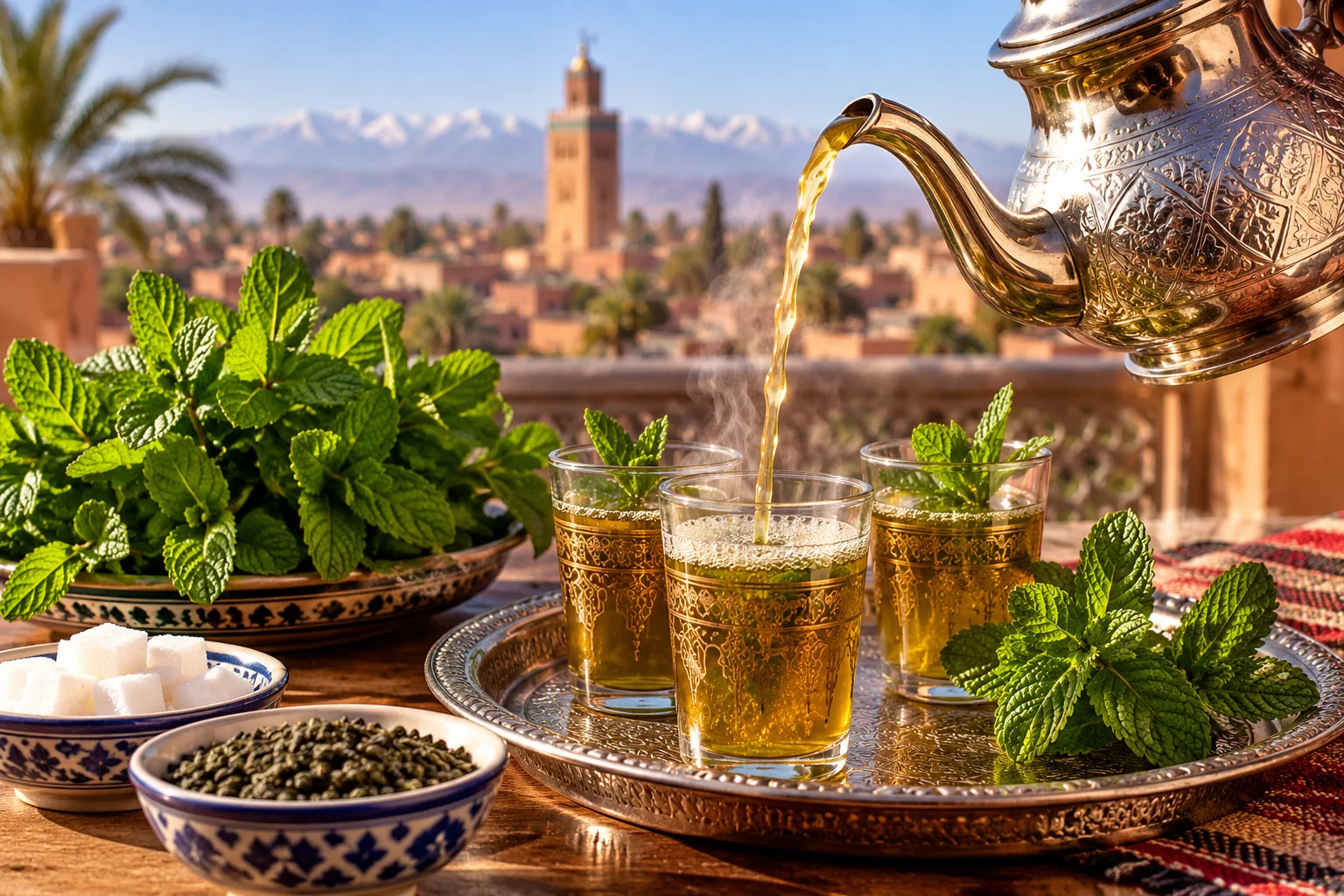
Moroccan mint tea, known simply as atay in Morocco, is made with gunpowder green tea, fresh spearmint, hot water and sugar. It is one of the drinks most closely tied to Moroccan hospitality, whether it is served to guests at home, shared during a conversation, or poured after a meal.
There is no single formula that every family follows. Some people like the tea strong, some use a lot of mint, and others prefer it very sweet. The method below gives you a reliable base, then you can adjust the balance until it tastes right to you.
Cuisine: Moroccan
Category: Beverage
Yield: 1 medium teapot
Ingredients for Moroccan Mint Tea
- 1 liter water
- 1 to 1½ tablespoons gunpowder green tea
- 1 generous handful fresh spearmint
- 3 to 5 tablespoons sugar, or to taste
Traditional Moroccan tea is often quite sweet, but you do not have to use the full amount of sugar. Start with less, taste the tea, and add more only if you want it.
👉 Serve it with: Moroccan Cookies and Pastries: Ghriba, Kaab el Ghazal and More
Why Gunpowder Green Tea Works Best
The usual base for Moroccan mint tea is Chinese gunpowder green tea. Its leaves are rolled into small pellets that open when they meet hot water.
It has enough strength to stay noticeable beside fresh mint and sugar, which is why it works so well in what is sometimes called Moroccan mint green tea. If gunpowder tea is not available, another plain green tea can be used, although the flavor will not be quite the same.
Which Mint Should You Use?
Fresh spearmint is the familiar choice in Morocco. Look for mint that smells fresh and has bright green leaves.
You may also see the drink described online as Moroccan peppermint tea, but spearmint is the mint most commonly associated with the traditional preparation.
Wash the mint well before adding it to the pot. The tender stems can go in too. If you want a stronger mint aroma, use a larger handful rather than crushing the leaves.
What You Need
A full Moroccan tea service is not essential, but three things are commonly used:
- A Moroccan teapot: usually metal, with a long curved spout.
- Small tea glasses: often decorated with colorful or geometric patterns.
- A serving tray: used to carry the pot and glasses together.
If your teapot is not designed for direct heat, do not place it on a burner. Boil the water separately and pour it into the pot.
How to Make Moroccan Mint Tea
1. Heat the Water
Bring about 1 liter of fresh water to a boil.
Pour a little of the hot water into the teapot, swirl it around, then empty it. This warms the pot before the tea goes in.
2. Add the Green Tea
Add 1 to 1½ tablespoons of gunpowder green tea to the warmed pot.
Pour in a small amount of hot water, swirl briefly, then discard that quick rinse. Moroccan households use different methods at this stage, but this is an easy approach for home brewing.
3. Add the Remaining Water
Pour the rest of the hot water into the teapot.
Let the green tea begin to infuse for a few minutes. Do not leave it too long, because the flavor can turn bitter.
4. Add the Mint and Sugar
Add the washed spearmint and sugar to the pot.
Push the mint gently into the tea without crushing it. Start with about 3 tablespoons of sugar, then add more later if you prefer a sweeter pot.
5. Mix the Tea
Instead of stirring the pot vigorously, pour one glass of tea and return it to the teapot.
Do this once or twice. It helps mix the sugar and mint through the tea.
6. Taste and Adjust
Pour a small amount into a glass and taste it.
If the tea is too strong, add a little hot water. If you want more mint, add a few fresh sprigs. Add extra sugar only if the tea needs it.
7. Pour and Serve
Pour the finished tea into small glasses.
As you become comfortable with the teapot, you can raise it gradually while pouring. This helps form the light foam often seen on Moroccan tea, but there is no need to pour from an unsafe height.
👉 Tea-time pairing: Quick and Easy Moroccan Snacks
Does Moroccan Mint Tea Have Caffeine?
Yes. Moroccan mint tea contains caffeine because the base is green tea, not mint alone.
The amount depends on how much gunpowder tea you use and how long it brews. If you want less caffeine, you can use a smaller amount of green tea or try a decaffeinated green tea, although the taste will change.
Why Is Moroccan Tea Poured from a Height?
The high pour is one of the most recognizable parts of Moroccan tea service. It helps create a light foam on top of the glass and is also part of the presentation.
Morocco's National Tourist Office describes mint tea as a traditional welcoming drink and notes the characteristic elevated pour.
At home, though, control matters more than height. Hot tea can burn, so only raise the teapot as high as you can manage comfortably.
Moroccan Tea and Hospitality
Moroccan mint tea is part of the wider tradition of Maghrebi mint tea, but preparation and serving habits differ across countries, regions and families.
In Morocco, tea is often part of welcoming someone. It may appear when guests arrive, while people sit and talk, during a visit to a shop, or simply when family and friends spend time together.
That social side is just as important as the recipe. Making a pot gives people time to sit, pour, taste and talk.
👉 Learn the customs: Moroccan Dining Etiquette
Can You Make Moroccan Tea with Less Sugar?
Yes. A very sweet tea is common in Morocco, but you can reduce the sugar at home.
The easiest approach is to cut the sugar gradually. That way the balance between the green tea and mint stays clear instead of becoming too sharp.
Seasonal Herbs and Other Variations
Mint is the best-known choice, but Moroccan tea is not prepared exactly the same way all year.
In cooler weather, some households use chiba, or wormwood. Other aromatic additions, including verbena or orange blossom, may also appear depending on the family and region.
These are variations, not one fixed national recipe.
Common Moroccan Mint Tea Mistakes
- Using too much green tea: the drink can become bitter very quickly.
- Using tired mint: fresh, aromatic mint gives a noticeably better cup.
- Crushing the mint: gently submerge it instead.
- Adding too much sugar at once: start with less and adjust after tasting.
- Overbrewing: long steeping can make the tea harsh.
- Pouring too high: the foam is not worth risking a burn.
What to Serve with Moroccan Mint Tea
Moroccan mint tea works especially well with sweet pastries and simple snacks.
Popular pairings include ghriba, kaab el ghazal, chebakia, dates, almonds, msemen, and Moroccan bread with honey.
Of course, it does not need food at all. A pot of tea can be enough on its own when people are sitting together.
Reliable Source
For additional cultural information about Moroccan mint tea and hospitality, see the Moroccan National Tourist Office food and drink guide .
Final Thoughts
A good Moroccan mint tea does not depend on complicated ingredients. What matters is the balance between green tea, fresh mint, water and sugar.
Once you make it a few times, you will probably stop measuring everything exactly. You will learn how strong you like the tea, how much mint works for you, and how sweet you want the final pot.
That flexibility is part of the tradition. The recipe matters, but sharing the tea matters even more.

CONVERSATION