
Moroccan Hospitality: Hosting Guests, Meals and Traditions
Moroccan hospitality is not really about decorating a room with lanterns or covering a table with as many dishes as possible. In the Moroccan homes I know, what guests remember most is the way they are received, how the meal unfolds, and whether the host makes them feel comfortable from the moment they arrive.
Food is central to that experience, but it is only one part of it. A guest may arrive long before the main meal is served. There is time to sit, talk, drink tea, eat something sweet and settle into the house before anyone begins thinking about the main dish. That slower rhythm is one of the things that makes Moroccan hospitality feel generous without needing to be complicated.
This page brings together the different parts of that experience: welcoming people with tea, preparing a meal for guests, understanding the difference between a formal invitation and a relaxed family dinner, and knowing some of the customs that make the table feel Moroccan rather than simply Moroccan-themed.
Hospitality Begins Before the Main Meal
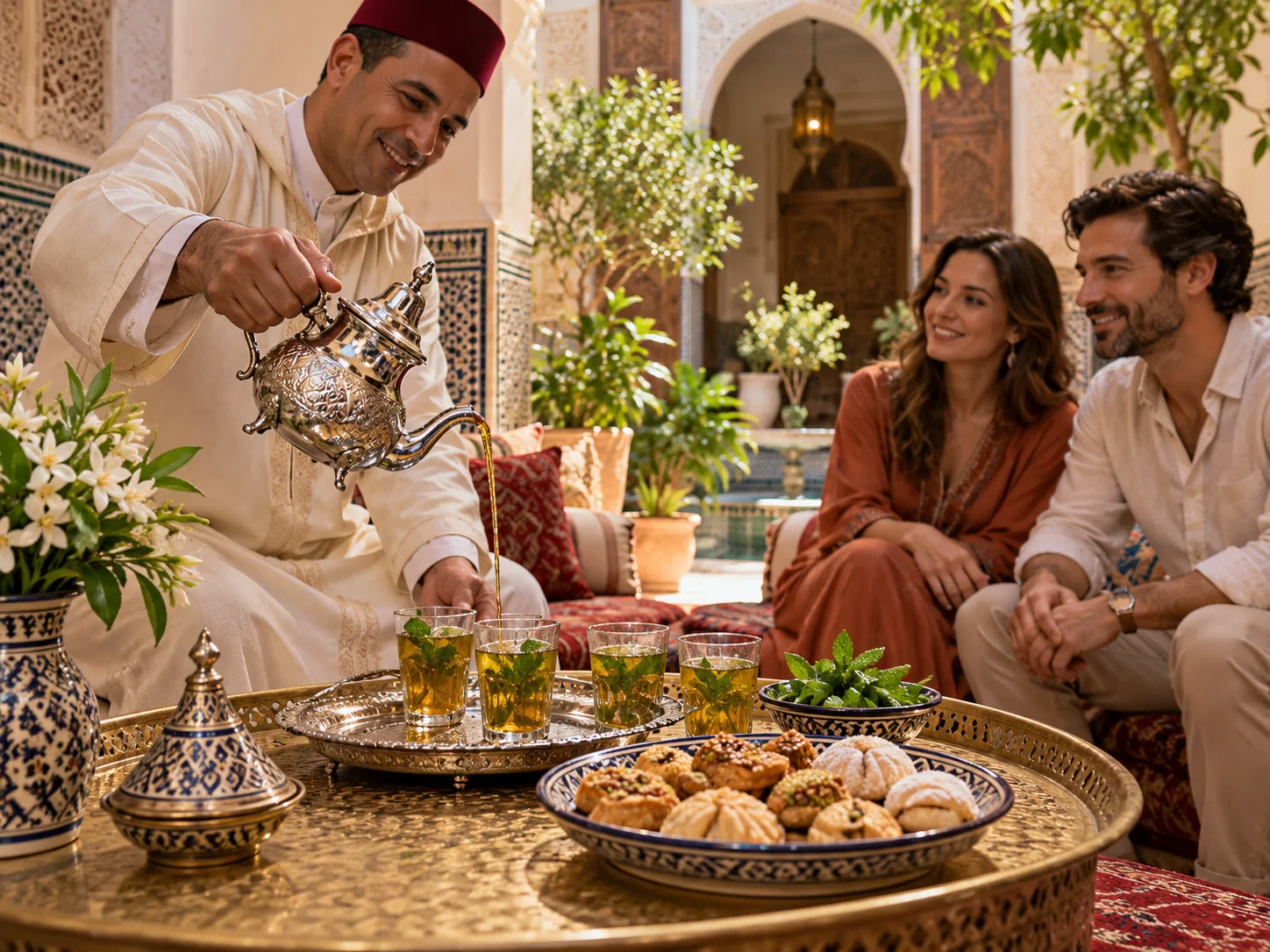
When guests arrive, I would not bring the main course immediately. The first part of the visit is usually much quieter. People greet each other, sit down and talk while tea and sweets are brought to the table.
A tray with a berrad, small tea glasses and Moroccan pastries can stay on the table while everyone settles in. Tea here is not only something to drink. It gives people time to arrive properly, and it allows the host to welcome them without making the evening feel rushed.
If you want to prepare it in the traditional way, my Moroccan mint tea guide explains how I know atay to be prepared and served.
The sweets do not need to become another full course. A few Moroccan pastries are enough before the meal. The purpose is not to fill the table. It is simply to welcome people while everyone talks and waits for the main food.
The Meal Depends on the Occasion
One of the most useful things to understand about Moroccan hosting is that not every invitation follows the same menu.
If I am thinking about a more formal meal for important guests or a celebration, I would not automatically begin with tagine. A more special invitation can start with a large communal dish such as lamb with prunes and almonds or roasted chicken. The food is placed in the center of the table and shared rather than divided into individual restaurant-style plates.
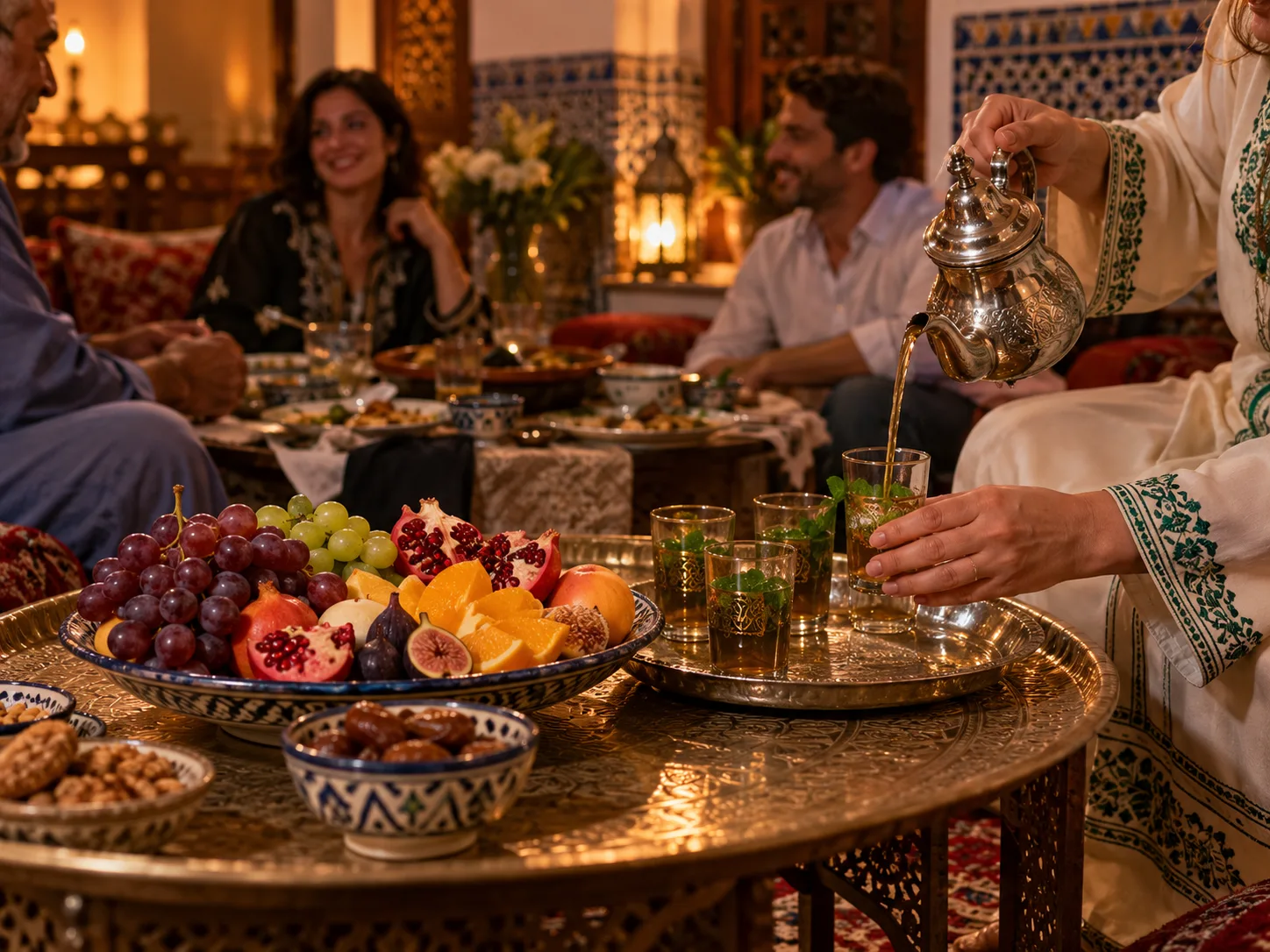
After that savory course, another dish can follow. In the kind of meal I know, seffa can come later with sugar and cinnamon, followed by a large platter of fresh fruit. Each dish has its own moment. There is no need to place meat, couscous, salad, tagine and dessert on the table at the same time.
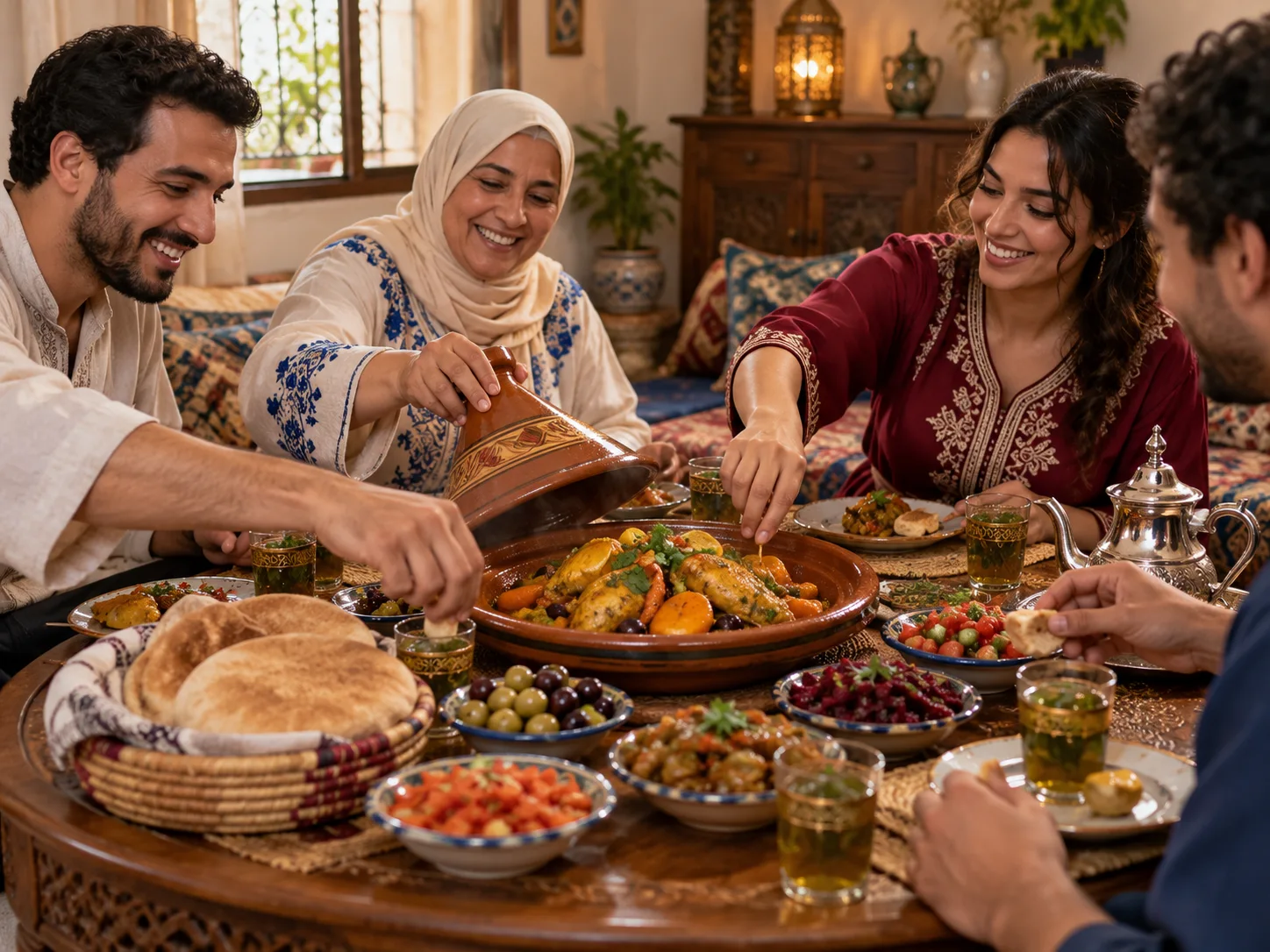
A casual dinner with family or close friends can be much simpler. Several small plates of Moroccan salad may be placed around the table, followed by one tagine with bread. Fruit can finish the meal, with tea afterward.
That is also why I do not treat couscous as an automatic side dish for tagine. Both are substantial meals in their own right. If couscous is the main dish, it deserves to be the center of the meal rather than something added beside another main course.
For a complete example of how I organize the food and timing, see my guide to hosting a Moroccan dinner party .
The Small Details Around the Table Matter
Some of the most memorable parts of Moroccan hospitality are not recipes at all.
Before a communal meal, especially at a larger celebration, guests may wash their hands without leaving their seats. A person carries the meqraj, which holds the water, together with the tass, the basin that receives it. Water is poured over each guest's hands above the basin, and a towel is offered for drying.
It is a practical tradition as much as a ceremonial one. When many people are eating together, there is no need for everyone to leave the room and queue at a sink. The washing comes to the guest instead.
Bread matters too. At a relaxed meal, pieces of bread can be kept in a bread basket so everyone can reach them. In some families, the loaves may remain near the senior person at the table, who tears and distributes the bread. At a more formal occasion, smaller individual loaves can be placed in front of each guest.
The important part is to pay attention. If bread is disappearing, bring more. If drinks are finished, refill them. If people are still eating, do not clear the dish simply because the next course is ready.
These details are also part of the customs I explain in my Moroccan dining etiquette guide .
A Moroccan Table Does Not Need to Look Like a Film Set
Another mistake I often see in Moroccan-themed dinners is the idea that every detail has to look exotic.
Moroccan homes are not all arranged in one way. Some families eat around a normal dining table with chairs. Other homes have sofas around a lower table. In rural areas, eating closer to the floor is still more common.
If you already have a comfortable dining table, use it. There is no reason to replace it with floor cushions simply to make the meal look more Moroccan.
The same applies to the food. Lamb with prunes and almonds already has its own presentation. A chicken dish may arrive with its olives or preserved lemon because those ingredients belong to the recipe. A tagine can go directly from the cooking vessel to the center of the table.
You do not need edible flowers, complicated sauce designs or restaurant-style plating to make the meal feel special. For me, Moroccan hospitality becomes more convincing when the food looks like the food people actually eat at home.
Ramadan and Larger Family Meals Have Their Own Rhythm
Hospitality also changes with the occasion. Ramadan, for example, has its own meal traditions and its own way of bringing family together around food.
Rather than trying to fit every Ramadan dish into a general dinner-party menu, I keep that subject separate. My Moroccan iftar guide looks specifically at the foods associated with breaking the fast and the way that meal comes together.
For a casual lunch or dinner outside Ramadan, small Moroccan salads and side dishes are often more useful than a long formal starter course. They can be placed around the table so everyone can reach them while the main dish remains the focus.
You can find examples in my guide to Moroccan salads and dishes for guests .
Hospitality Continues After the Meal
A good Moroccan invitation does not end the moment the last plate is cleared.
People may stay and talk long after eating. Tea may return to the table. At a large gathering, the hand-washing set may come around again after the meal.
There is also another small tradition I know that says a lot about the way hospitality is understood. If a guest came to the meal but left a child or another close family member at home, the host may prepare something for them to take back.
It could be a few sweets, some meat or chicken, or part of another dish from the meal. The person who could not attend is still remembered.
That gesture is more important to me than trying to make the house look like a restaurant. Moroccan hospitality is really about noticing people, making sure they have enough, giving them time, and making them feel that their presence matters.
Welcoming Guests the Moroccan Way
If you are planning a Moroccan meal for guests, start with the experience rather than the decoration.
Give people time to arrive. Bring tea before the meal. Choose a menu that suits the occasion instead of cooking every famous Moroccan dish at once. Keep bread and drinks available. Let people share the food. Do not rush the table.
A beautiful tea tray, Moroccan ceramics or a traditional tablecloth can make the room feel special, but they should support the evening rather than become its purpose.
The strongest Moroccan hospitality I know is much simpler: welcome people well, feed them generously, pay attention to the table and allow the visit to continue naturally.

CONVERSATION