
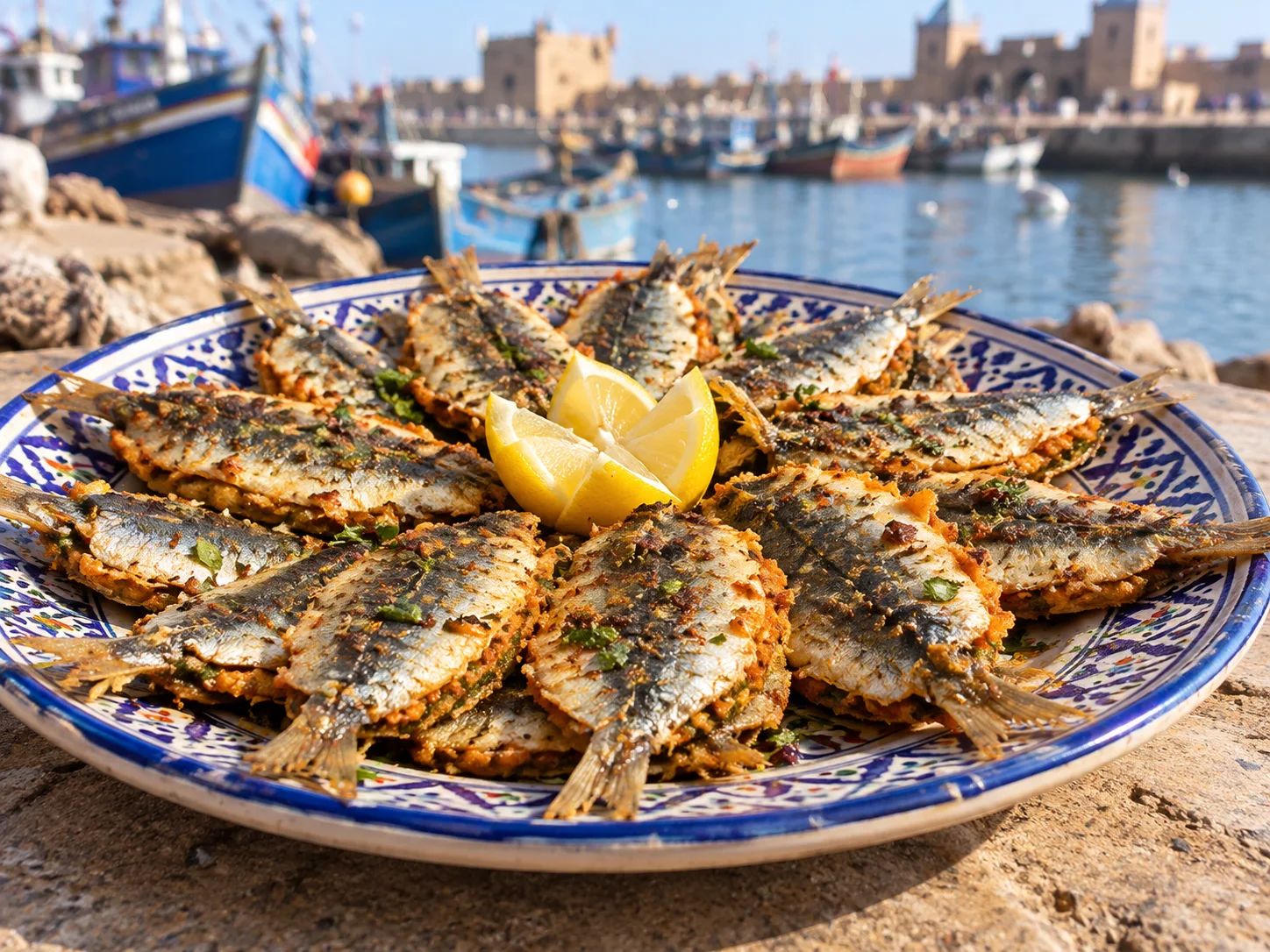
Moroccan fish cooking does not depend on one recipe. The same sardines can become kefta cooked slowly in tomato sauce, be filled with chermoula and fried or grilled, or appear beside another dish at the table. White fish such as whiting can be treated in a similar way, while seafood pastilla takes shrimp, calamari and fish in a completely different direction.
The recipes below focus on preparations I know from Moroccan cooking rather than trying to turn every seafood dish into the same combination of spices. The first is a fish kefta tagine with a thick tomato sauce, followed by the two ways we commonly prepare sardines, and finally a seafood pastilla filled with shrimp, calamari, white fish and Chinese vermicelli.
Moroccan Fish Kefta Tagine
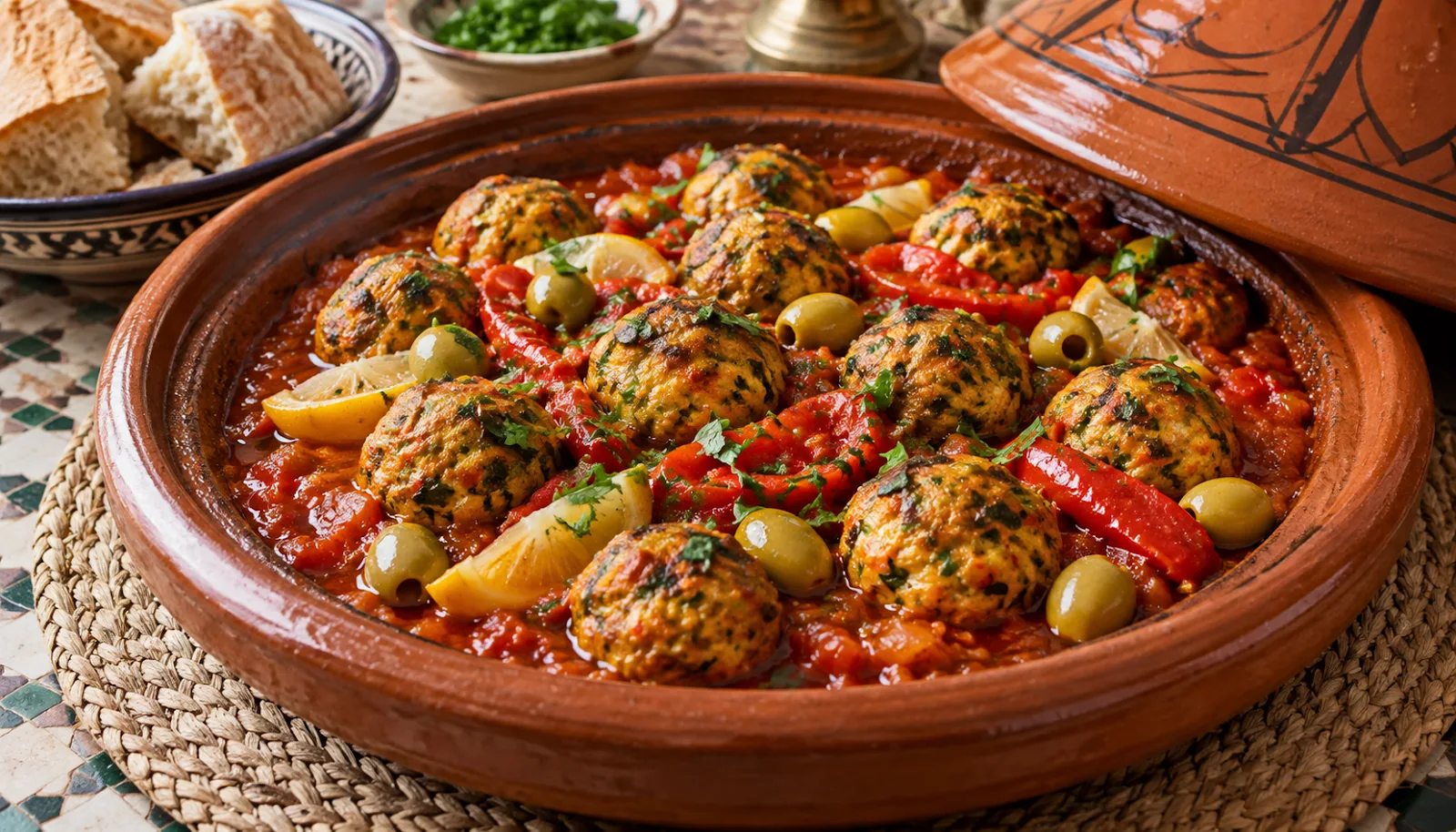
This is one of the most useful Moroccan fish recipes because the same method works with whiting or sardines. The fish is minced with herbs, spices and a small amount of sheep fat, shaped into small balls, then cooked directly in a tomato sauce until the sauce becomes thick enough to coat the kefta.
The sheep fat is important in this version. It is minced with the fish rather than added separately to the sauce, giving the fish mixture more richness while it cooks.
Ingredients for the Fish Kefta
- 1 kg white fish such as whiting, or cleaned sardines
- 2 tablespoons chopped parsley
- 1 tablespoon chopped coriander
- 2 garlic cloves
- 2 tablespoons oil
- 50 g sheep suet, minced with the fish
- 1 teaspoon paprika
- ½ teaspoon turmeric
- ½ teaspoon cumin
- A pinch of black pepper
- ¼ cup lemon juice
- Hot pepper to taste
- Salt to taste
Ingredients for the Tomato Sauce
- 1 onion, finely chopped
- 3 tomatoes, grated
- 2 garlic cloves
- Tomato paste, as needed
- 1 tablespoon chopped parsley
- 1 roasted red pepper, chopped
- ½ teaspoon turmeric
- 1 teaspoon cumin
- A pinch of black pepper
- 1 bay leaf
- 2 tablespoons oil
- ¼ preserved lemon
- Green olives for finishing
Prepare the Fish Kefta
Mince the whiting or sardines together with the sheep suet. Add the parsley, coriander, garlic, paprika, cumin, turmeric, black pepper, lemon juice, hot pepper, salt and oil. Mix thoroughly so the herbs and spices are distributed throughout the fish.
Shape the mixture into small meatballs. They should be firm enough to hold together but should not be pressed so tightly that the finished fish becomes dense.
Prepare the Sauce
Add the oil, chopped onion and garlic to the tagine and cook over medium heat for a few minutes. Add the grated tomatoes, tomato paste, parsley, roasted red pepper, turmeric, cumin, black pepper and bay leaf. Let everything cook together until the tomatoes begin to reduce and form a proper sauce rather than remaining watery.
This reduction is important because the fish will release more liquid after it is added. There is no need to pour a large amount of water into the tagine.
Cook the Fish Meatballs
Arrange the fish kefta carefully over the tomato sauce. Add the preserved lemon and green olives around the meatballs, then drizzle a little olive oil over the top.
Cover the tagine and cook over very low heat until the fish is cooked through and the tomato sauce becomes thick and rich. Avoid adding unnecessary water. The tomatoes and fish already release enough moisture while cooking.
The finished tagine should have a concentrated sauce that stays around the fish meatballs instead of looking like soup. Serve it hot with Moroccan bread so the sauce can be eaten directly from the tagine.
Moroccan Sardines Two Ways
Sardines are especially useful in Moroccan cooking because the same inexpensive fish can be prepared in very different ways. In my experience, two of the most familiar are sardine meatballs cooked in tagine and sardines filled with chermoula and then fried or grilled.
Sardine Meatballs in Tomato Sauce
For sardine kefta, use sardines in place of the white fish in the recipe above. Mince them with the herbs, spices, garlic, oil and sheep suet, shape the mixture into small balls and cook them in the same reduced tomato sauce.
This preparation belongs in the tagine. The fish balls absorb the tomato, spices and preserved lemon while remaining soft inside, and the sauce should again finish thick rather than watery.
Stuffed Sardines With Chermoula
The second preparation keeps the sardines whole enough to be filled with chermoula. After cleaning the fish, add chermoula inside and then either fry or grill the sardines.
The important difference is that these sardines are not cooked in the tomato sauce used for kefta. Frying gives them a stronger crisp exterior, while grilling produces a lighter smoky preparation.
In the way I know them, fried or grilled stuffed sardines can be served beside a plate of Moroccan lentils. The lentils remain the main dish in that meal; the sardines are an accompaniment rather than a fixed recipe called “lentils with sardines.” In other meals, lentils may instead appear in a smaller plate among other dishes.
Chermoula in Moroccan Fish Cooking
Chermoula is one of the most useful preparations for Moroccan fish, but it should not be treated as one rigid formula. Parsley and coriander, garlic, lemon, cumin, paprika, salt, pepper and chili are familiar elements, with quantities adjusted according to the fish and the family preparing it.
With sardines, the chermoula can be placed inside the fish before frying or grilling. In a fish tagine, the same family of flavors can be worked into the fish and sauce. The important point is that chermoula supports the fish rather than hiding it under an unnecessarily complicated mixture.
Moroccan Seafood Pastilla
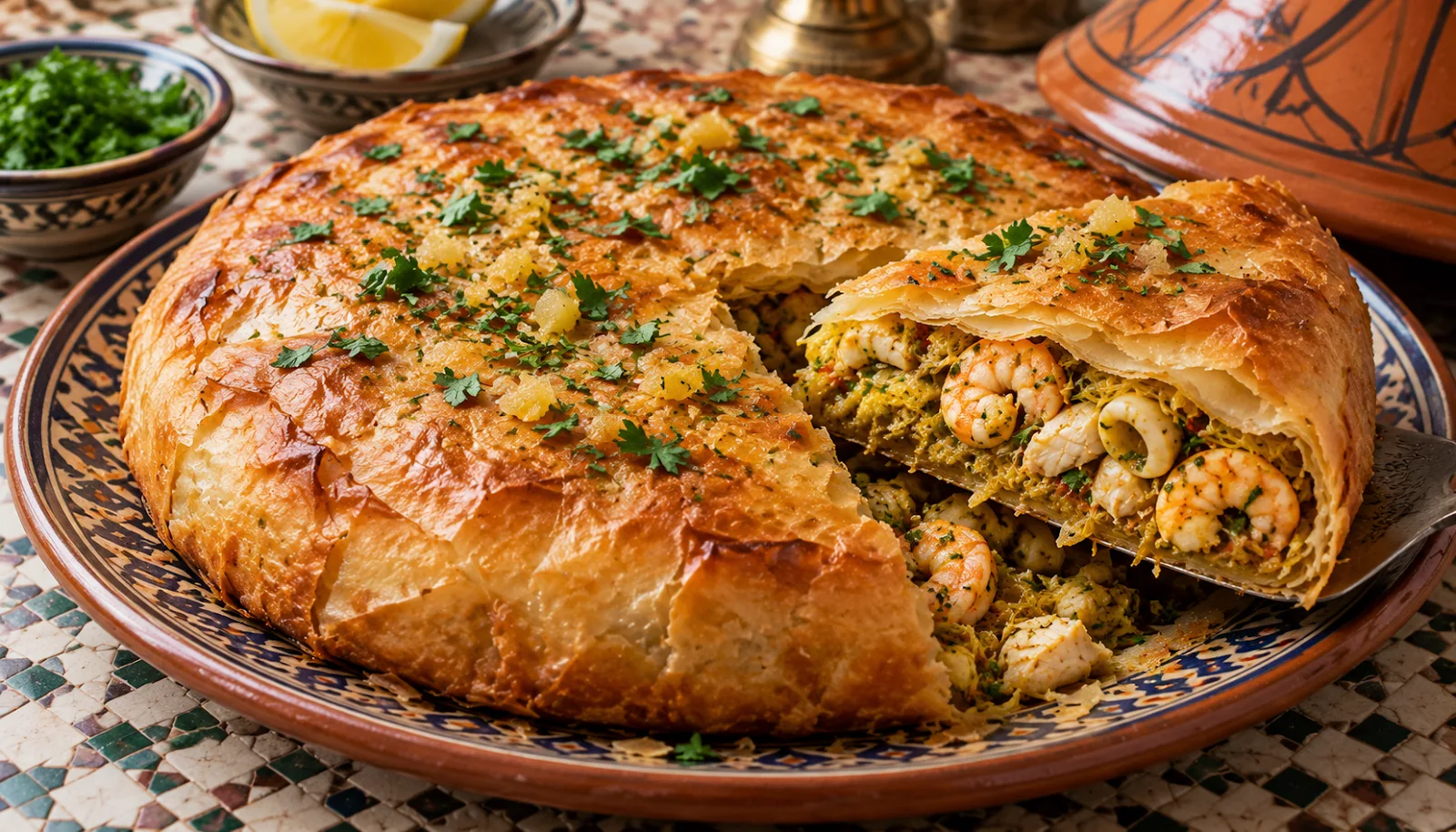
Seafood pastilla, also called seafood bastilla, is very different from the fish tagine. Instead of a saucy shared dish, the seafood is cooked separately, combined with seasoned vermicelli and enclosed inside thin warqa pastry before baking until crisp.
This is a richer preparation and works particularly well for a larger family meal or a special table because shrimp, calamari and white fish are all brought together inside one pastry.
Ingredients
- 1 kg peeled shrimp
- 600 g calamari, chopped
- 1 kg boneless white fish such as whiting
- 400 g Chinese vermicelli
- 500 g warqa or pastilla pastry
- 2 to 3 bay leaves
- A little thyme
- 3 garlic cloves
- Preserved lemon, to taste
- Lemon juice, to taste
- ½ teaspoon harissa, or to taste
- Soy sauce, to taste
- Chopped coriander
- Chopped parsley, using more parsley than coriander
- 1 fish bouillon cube or fish seasoning
- ½ teaspoon turmeric
- ½ teaspoon black pepper
- Salt as needed
- Oil
- Butter
Prepare the Seasoning Mixture
Mix the parsley, coriander, garlic, lemon juice, preserved lemon, harissa, soy sauce, turmeric, black pepper and fish seasoning. Because this seafood-pastilla mixture contains soy sauce and other additions, I treat it as the seasoned filling mixture for this recipe rather than calling this exact version a traditional chermoula.
Cook Each Seafood Separately
Cook the shrimp, calamari and white fish separately rather than putting everything into the pan at the same time. Add a little butter and oil to the pan along with some of the seasoning mixture and bay leaves.
Cooking each seafood separately gives better control because shrimp, calamari and fish do not need exactly the same cooking time. When each one is ready, remove it and keep the cooking juices in the pan.
Prepare the Chinese Vermicelli
Soak the Chinese vermicelli in hot water until softened, drain it and cut it into shorter pieces.
Return it to the same pan used for the seafood and sauté it briefly in the remaining juices and seasoning. This is where the vermicelli picks up the seafood flavor instead of tasting like a separate neutral ingredient.
Assemble the Seafood Pastilla
Grease a baking tray with butter and oil. Arrange the warqa sheets so they overlap and leave enough pastry around the edges to fold over the filling later.
Add the cooked white fish, calamari, shrimp and seasoned vermicelli in even layers.
Fold the warqa tightly over the filling and seal the pastilla so the seafood remains enclosed during baking. Brush the top generously with butter.
Bake Until Crisp
Bake the seafood pastilla in a preheated oven until the pastry becomes deeply golden and crisp. The filling is already cooked, so the oven stage is mainly about heating everything together and developing the texture of the warqa.
Let the pastilla settle briefly before cutting it. This helps the filling stay together instead of spilling immediately when the pastry is opened.
Which Moroccan Fish Recipe Should You Start With?
For an everyday family meal, the fish kefta tagine is the most practical place to begin. It works with either whiting or sardines, uses an inexpensive tomato sauce and is eaten naturally with Moroccan bread.
If you have good fresh sardines and want something simpler, fill them with chermoula and fry or grill them. They can accompany another dish such as Moroccan lentils without turning the two foods into one fixed recipe.
For a larger meal, seafood pastilla is the more elaborate option. Shrimp, calamari, white fish and seasoned vermicelli produce a much richer filling, while the warqa gives the finished dish the crisp texture that distinguishes it from tagine.
Together, these preparations show why Moroccan fish recipes cannot be reduced to one generic seafood stew. Fish can be minced into kefta, filled with chermoula, grilled, fried, cooked slowly in tomato sauce or enclosed inside pastry, with each method creating a completely different Moroccan dish.
For the coastal food culture behind these preparations, see Essaouira & Agadir Coastal Seafood Traditions .

CONVERSATION