
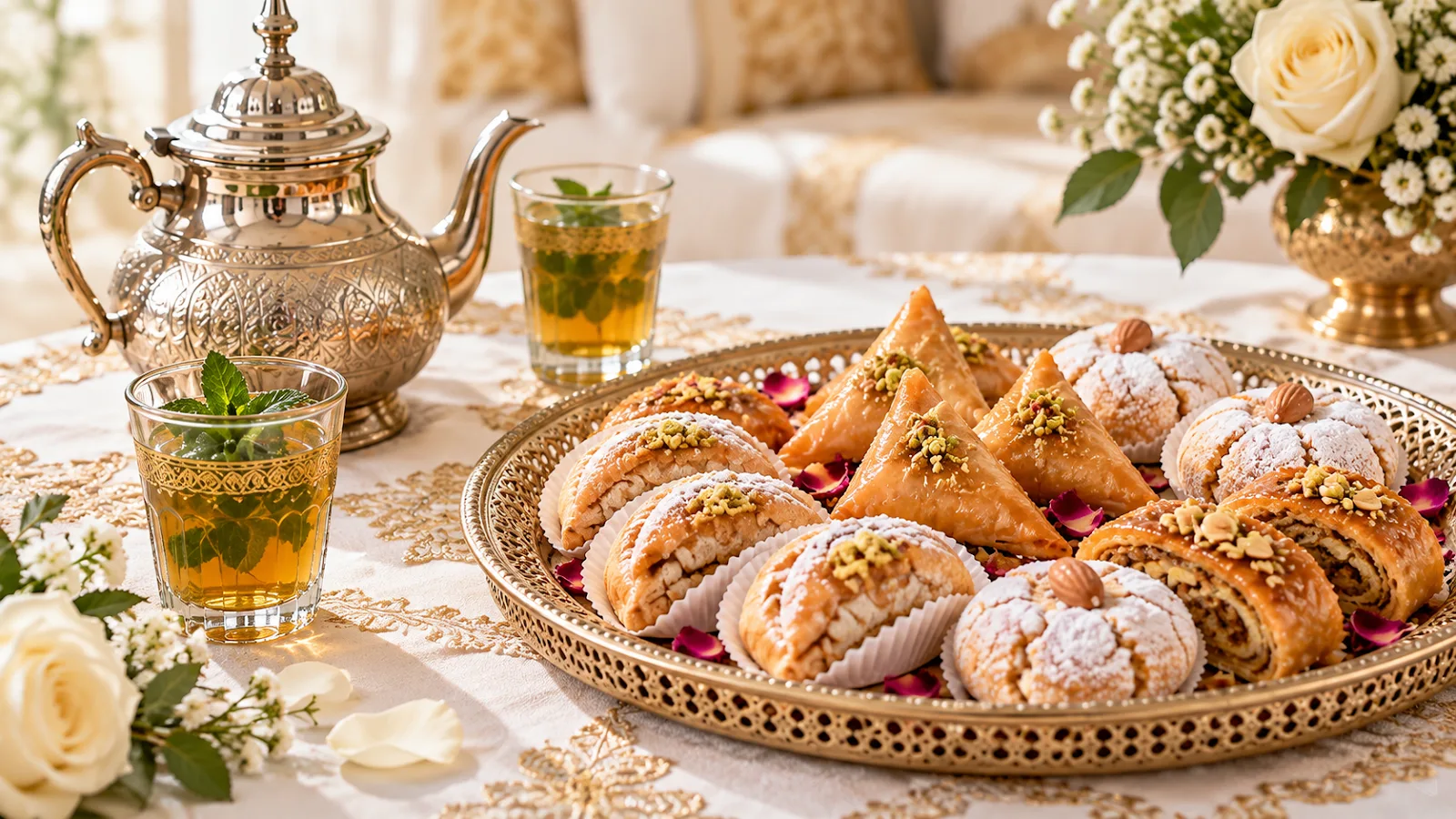
Walk into a Moroccan pastry shop and ask for kaab ghzal, and you may be asked another question before the sweets are weighed: which one do you want? The real almond version costs more. A cheaper version may have almost the same shape and decoration, but its filling is made mainly with peanuts and almond extract.
That small conversation at the counter explains Moroccan pastries better than a long list of dessert names. Two pieces can look nearly identical behind the glass and still be very different once you taste them. Then, beside both of them, you find another world of sweets altogether: sablé, with its own dough, flavours, shapes and decorations.
Moroccans who buy pastries regularly understand these differences. We do not simply point at the nicest-looking piece. We ask what is inside, look at the price, think about the occasion and decide what deserves a place on the tray.
The Almond Sweets People Recognize Immediately
The most valued category is built around real almonds. Kaab ghzal, mhencha, briwat looz and ghriba dlooz are some of the sweets I immediately associate with this family. They have different shapes and preparations, but almonds are what give them their identity.
This is also why their price can change noticeably. Moroccan pastry shops normally sell sweets by the kilogram, and the price follows the ingredients. When almonds become expensive, the finished pastry becomes expensive too. There is no permanent price that separates the good version from the cheaper one; it depends on what almonds are costing at the time and on the quality the shop is using.
For someone buying several kilograms for a ceremony, that difference quickly becomes important. A small change in the price of one piece does not look dramatic, but across a large tray or several trays it affects the whole budget.
Still, real almond sweets have a character that is difficult to reproduce. The filling has its own taste and texture, and people who have eaten these pastries for years recognize it quickly.
If you want to go deeper into this side of Moroccan pastry, I also have a guide to Moroccan almond-based desserts.
The Cheaper Version Is Not Sablé
This is probably the distinction visitors miss most often. When a cheaper kaab ghzal or another almond-style sweet is offered, it does not mean the baker has filled it with sablé dough. The cheaper version belongs to another idea completely: replacing expensive almonds with a peanut-based mixture and adding almond extract to bring the aroma closer to the original.
A good pastry maker can make the outside convincing. The shape may be familiar, the decoration may be neat and, at first glance, there may be little reason for someone unfamiliar with Moroccan sweets to question it.
The difference becomes much clearer when you eat it. Peanut has a strong flavour. Almond extract can change the smell and add an almond-like note, but it cannot completely hide the peanut underneath. Texture also gives clues. This is why experienced buyers can often tell very quickly which filling they have been served.
In my experience, this is not something shops need to hide. You normally ask for the sweet, the seller explains the available quality or price, and you choose. The cheaper version exists because there is a market for it. A family buying a large quantity may need to control the cost, and not every box of pastries is being bought for the same occasion.
Sablé Has Its Own Place on the Moroccan Tray
Sablé should not be confused with those peanut versions. It is not there to pretend to be almond pastry. It is another part of the Moroccan pastry counter, and people enjoy it for its own taste.
One reason sablé became so varied is the freedom it gives the pastry maker. From the same general style of dough, bakers can create an enormous number of designs. Change the shape, filling, coating or decoration and the tray looks different again. Go from one bakery to another and you can find designs you did not see in the previous shop.
Names such as fakkas, ghriba, chebakia and Richebond are among the familiar sweets people talk about, together with many more that appear in different shapes and finishes. Moroccan pastry counters are not frozen in time. Bakers keep creating, adapting and giving sweets new appearances.
Richebond is a good example of how local pastry names can develop. Richebond is a well-known Moroccan bedding brand, and the sweet became known by that name because its design reminded people of the patterns associated with Richebond bedding. It is the kind of detail you learn by living around these sweets rather than by simply reading their names from a menu.
You can explore more of these pastries in my guide to Moroccan cookies and pastries.
What Goes on the Tray Depends on Who Is Coming
The differences become even more important when pastries are bought for a wedding, celebration or important visit. There is no single Moroccan tray that every family must prepare. The choice depends heavily on the budget, the number of guests and the importance of the occasion.
Real almond pastries and sablé can sit together perfectly well on the same dish. Sablé is not considered a fake substitute for almonds; it has its own place. A beautiful tray can combine both, and families choose the balance they can afford.
The peanut imitation is different. If important guests are coming, especially people you want to honour, serving a cheaper peanut version in place of genuine almond sweets can be embarrassing. For people who know Moroccan pastries well, the difference will probably not remain hidden for long. One bite is often enough.
This is why the budget for a ceremony is not simply about buying as many sweets as possible. Families think about where to spend more and which guests or tables deserve the better quality. Hospitality is part of the decision.
How I Would Buy Moroccan Pastries
If I am standing in front of the pastry counter, I first decide what I actually want rather than choosing only by appearance. If I want kaab ghzal, mhencha or briwat looz, I ask whether it is the real almond version. If another version is available, I ask the price and what the filling is made from.
There is nothing strange about doing this. Because pastries are sold by the kilogram, you can compare the options directly and decide according to your budget. If the sweets are for ordinary tea at home, the decision may be different from what I would make for a wedding or for important guests.
I also do not expect sablé to taste like almond sweets. If I want sablé, I choose it because I like sablé. The pleasure is in the buttery texture, the different shapes and the variety a pastry maker can create with it.
And when I want the genuine almond experience, I would rather buy less of the real thing than confuse it with a peanut imitation. Taste makes the difference very quickly.
Look Beyond the Shape
A Moroccan pastry display can be deceptive in the best possible way. Rows of small sweets arrive in different colours, shapes and decorations, and at first they seem to belong to one enormous dessert family. Once you know what you are looking at, the tray becomes much easier to read.
There are the almond sweets, where the quality and cost of real almonds matter. There are cheaper peanut-based versions created for people who want a similar style at a lower price. Then there is sablé, a separate world where bakers can play endlessly with shape and decoration.
So when you enter a pastry shop in Morocco, do not be afraid to ask questions. Ask what the filling is made from. Ask the price per kilogram. Tell the seller what you are buying for. Then choose according to your taste and your budget.
The sweets on the final tray may look beautiful together, but now you will know that they do not all tell the same story.
For a broader selection, you can also browse the Moroccan desserts collection, or continue with my guide to Moroccan mint tea, the drink you will so often find beside a plate of pastries.

CONVERSATION