
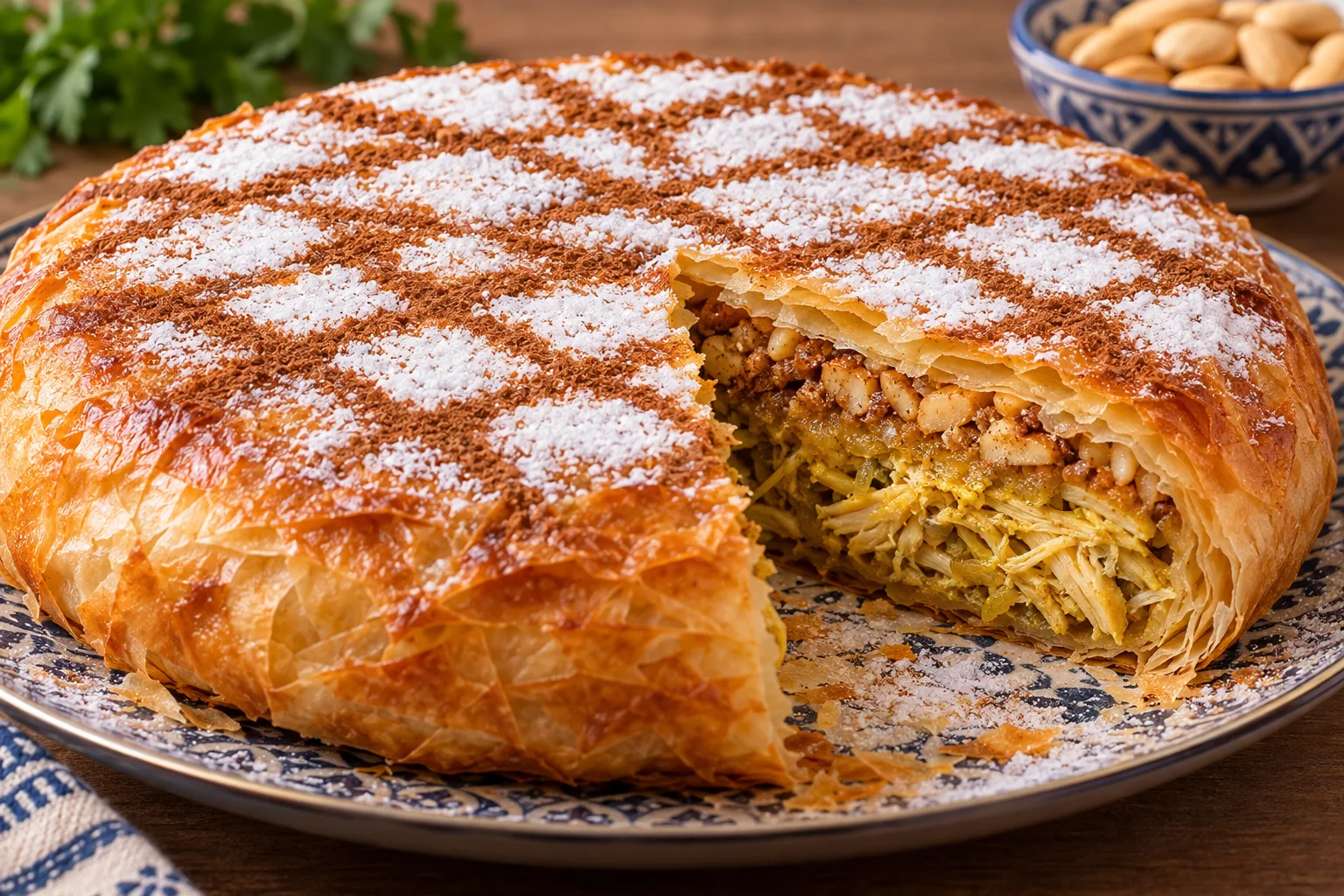
A good Moroccan chicken pastilla is built in layers, but the important part is not simply stacking chicken, eggs and almonds inside pastry. Each layer is prepared separately so that the finished pastilla stays crisp outside while remaining rich and flavorful inside.
In the version I know, the chicken is cooked slowly with a large amount of onion, herbs, saffron and warm spices. Once the chicken is tender, it is removed and shredded, while the onion mixture stays in the pot. Eggs are then worked directly into that sauce until almost all the remaining moisture disappears. Moroccans often refer to this thick onion-and-egg mixture as the ta'leek.
The almonds form a completely different layer. They are boiled, peeled and fried before being crushed with a little cinnamon, powdered sugar and orange blossom water. When those three fillings are wrapped in thin warqa and baked together, you get the contrast that makes chicken pastilla so distinctive: savory chicken, rich egg and onion, sweet fragrant almonds and crisp pastry.
You may also see the dish written as bastilla. The spelling changes, but both names are commonly used for the same Moroccan pastry tradition.
Why Chicken Pastilla Is Different From an Ordinary Pie
Pastilla is sometimes described simply as a sweet-and-savory pie, but that does not really explain how it is prepared. The filling is not mixed together into one uniform mixture. The chicken, ta'leek and almonds remain distinct during assembly, which gives each bite several textures and flavors.
The chicken itself should be well seasoned but not swimming in liquid. This is one reason I use very little added water at the beginning. With around 1.5 kg of chopped onion in the pot, plenty of moisture will come naturally from the onions as they cook.
The second important point is the egg mixture. If too much liquid remains in the pot, the warqa can become soft from the inside. I keep stirring the eggs with the onion sauce until the mixture becomes thick and rich and the excess moisture has evaporated.
Finally, the almonds should not disappear into the other ingredients. Their sweetness, cinnamon and orange blossom water are part of the traditional contrast in this style of Moroccan pastilla.
Moroccan Chicken Pastilla Recipe
This quantity makes one large family-style pastilla serving approximately 6 to 7 people.
Ingredients
- 1 whole chicken, about 2 kg, cleaned and well washed
- 1.5 kg onions, finely chopped
- Chopped fresh cilantro
- Chopped fresh parsley
- 1 tablespoon ground ginger
- 1 teaspoon turmeric
- ½ teaspoon black pepper
- Cinnamon sticks
- A pinch of saffron threads
- Salt, to taste
- 1 cup olive oil
- 6 eggs
- 400 g almonds
- A little ground cinnamon for the almonds
- Powdered sugar for the almonds and final decoration
- Orange blossom water
- About 1.5 kg warqa pastry
- Melted butter mixed with oil, for brushing the warqa
- Ground cinnamon, for finishing
Cook the Chicken Slowly With the Onions and Spices
Place the cleaned chicken in a large pot with the olive oil, finely chopped onions, cilantro, parsley, ginger, turmeric, black pepper, cinnamon sticks, saffron and salt.
I do not begin by pouring a large amount of water into the pot. Add only a small amount, because the onions will release a considerable amount of liquid as they soften. The goal is to cook the chicken in the concentrated onion, herb and spice mixture rather than dilute everything into a thin broth.
Cook over moderate heat until the chicken is completely cooked and tender. Stir and turn it when necessary so that the seasoning remains distributed around the meat.
As the chicken cooks, the onions gradually collapse into the sauce. This becomes the base of the ta'leek later, so there is no reason to rush this stage.
Remove and Shred the Chicken
Lift the cooked chicken from the pot and allow it to cool enough to handle. Remove the bones and shred the meat into small pieces.
Keep the onion mixture in the pot. Do not throw it away and do not mix the shredded chicken back into it. The two components will become separate layers inside the finished pastilla.
Turn the Onion Sauce Into Ta'leek
Return the pot with the onion sauce to the heat. Add the six eggs gradually while stirring continuously.
At first the mixture may still look wet. Continue stirring and cooking. The eggs will scramble into the onions and absorb much of the concentrated sauce.
Continue cooking until the residual liquid has evaporated and the onion-and-egg mixture becomes thick enough to hold together without releasing watery liquid.
This stage matters more than trying to follow an exact number of minutes. I judge it by texture. The mixture should look rich and moist, but not wet enough to soak the pastry.
Prepare the Fried Almond Layer
Boil the almonds briefly so the skins can be removed, peel them, then fry them until golden. Allow them to cool before crushing them.
Do not grind them into a completely smooth powder. A slightly coarse texture gives the filling more character.
Mix the crushed fried almonds with a little powdered sugar, cinnamon and orange blossom water.
This is the sweet layer of the chicken pastilla. It should smell clearly of fried almonds and orange blossom water without becoming overly wet.
Assemble the Pastilla in Three Distinct Layers
Grease a large round baking tray with some of the melted butter-and-oil mixture. Arrange the warqa sheets so that they overlap across the base and extend beyond the sides of the tray. Those overhanging pieces will later fold back over the filling.
Spread the shredded chicken evenly over the pastry as the first filling layer.
Cover the chicken with an even layer of the thick ta'leek made from the onions and eggs.
Finish with the sweetened crushed almond mixture.
Keeping these layers separate is important. The finished slice should show chicken, egg and almond rather than one mixed filling.
Fold the Warqa and Bake at 180°C
Brush the exposed pastry with the butter-and-oil mixture as you work. Fold the overhanging warqa securely over the filling, bringing the sheets toward the center until the pastilla is completely enclosed.
Place a final sheet of warqa over the top to smooth the surface and seal the pastilla neatly. Brush the exterior again with the butter-and-oil mixture.
Bake in a preheated oven at 180°C until the exterior is deeply golden, crisp and well browned.
I prefer using the appearance of the pastry rather than forcing one universal baking time. Warqa thickness, the size of the pastilla and the oven itself can all change how quickly the surface browns.
Finish With Powdered Sugar and Cinnamon
Allow the pastilla to settle briefly after it comes out of the oven, then dust the surface with powdered sugar and decorate it with ground cinnamon.
This final sweetness is not an accidental dessert-style garnish. In chicken pastilla, it completes the contrast already created by the almonds inside: seasoned chicken and onion on one side, fried almonds, cinnamon and sugar on the other.
Serve the pastilla warm, when the warqa is still crisp and the filling has had just enough time to settle for clean slices.
Chicken Pastilla and Seafood Pastilla Are Not the Same Filling
Moroccan pastilla also exists in seafood versions, but I would not describe seafood pastilla as simply chicken pastilla with fish substituted for chicken. The flavor structure is different.
The seafood version we prepare uses ingredients such as white fish, shrimp, calamari, Chinese vermicelli and a savory chermoula-based seasoning. It does not depend on the same sweet almond-and-egg layering used in this chicken version.
You can see that preparation in our Moroccan seafood recipes guide , where seafood pastilla is treated separately rather than forced into the chicken recipe.
What Makes a Good Moroccan Chicken Pastilla
For me, the best pastilla is not the one with the longest ingredient list. It is the one where each component is handled correctly.
The chicken should be tender and well seasoned. The onions and eggs should be reduced enough that they will not make the pastry soggy. The almonds should remain fragrant and slightly textured, and the warqa should be generously brushed so that it becomes crisp and deeply browned in the oven.
Most importantly, the finished dish should still taste like several deliberate layers coming together. You should notice the savory chicken, the concentrated onion-and-egg mixture, the sweet fried almonds and the crisp pastry separately before they meet in the same bite.
That contrast is what makes Moroccan chicken pastilla one of the most recognizable dishes served for family celebrations and special meals.
For more background on how dishes such as pastilla developed inside Morocco's wider food culture, continue with our history of Moroccan cuisine .

CONVERSATION