
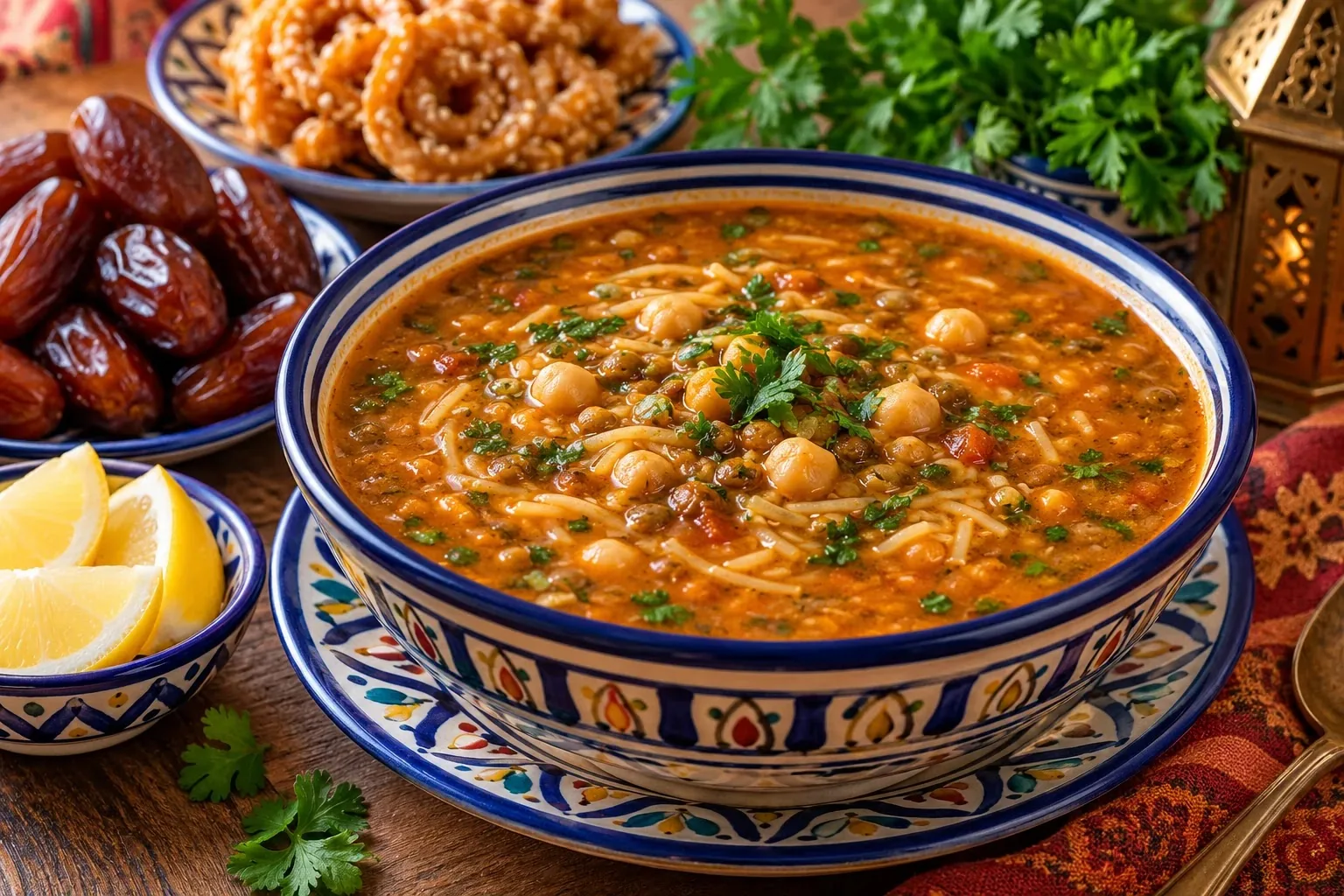
In Moroccan homes, harira has a place that goes beyond being another soup. During Ramadan, the smell of tomatoes, herbs and spices coming from the kitchen is one of the familiar signs that Iftar is approaching. Dates and chebakia may already be waiting on the table, but the meal feels different when a large bowl of hot harira is ready to share. We eat it outside Ramadan too, particularly when the weather is cold, yet the connection with that evening meal remains especially strong.
The Moroccan harira soup I make at home contains no meat. Some families cook harira with lamb or beef, but the version I know gets its substance from chickpeas and lentils, its flavor from tomatoes and generous fresh herbs, and its final texture from a flour-and-water mixture called tadweera. A little smen, Morocco's preserved butter, goes in at the end. It is a straightforward combination, but it needs the right order of cooking to become the thick, velvety soup we want.
I normally prepare a large batch for eight to twelve people. At that size, small details become important: removing the chickpea skins after soaking, using celery leaves rather than stalks, keeping some herbs for the finish, and never rushing the tadweera. None of these steps is complicated, but each changes what arrives in the bowl.
What Makes Traditional Moroccan Harira Different?
Harira begins as a tomato-and-legume broth, but it does not finish like an ordinary vegetable soup. Chickpeas should remain tender and recognizable, while the lentils soften into the liquid. The tomato gives the broth its body and color, and the herbs provide the aroma that makes harira immediately familiar to anyone who grew up eating it. Ginger, turmeric, black pepper and a little cinnamon belong in the background, supporting those ingredients rather than overwhelming them.
The defining change happens near the end. Once everything is cooked, I add pasta and then slowly work the tadweera into the simmering soup. This is what brings the broth together. The aim is thick and velvety, but still fluid enough to pour naturally from a ladle. If there is too much flour, harira becomes heavy; if the mixture is added too quickly, lumps form. The consistency depends on attention at the stove, not on using every last spoonful of flour mixture.
How I Prepare Moroccan Harira at Home
1. Soak and prepare the chickpeas, lentils and tomatoes
I start the preparation with the chickpeas. They soak overnight, and before cooking I remove their skins. The lentils are soaked as well. Next come the tomatoes: I boil them, take off the skins, then blend the pulp together with the seeds. I do not strain the mixture. The smooth tomato base becomes part of the broth, rather than leaving noticeable pieces of skin in the soup. I finely grate a large onion and chop the celery leaves, parsley and cilantro. The celery stalks are not part of my method. I set aside half the parsley and cilantro for later, because I want fresh herbal aroma at the end as well as flavor developed during cooking.
2. Build the harira broth in the pressure cooker
In a large pressure cooker, I combine a little olive oil or cooking oil with the grated onion, chopped celery leaves, half the parsley and cilantro, chickpeas and lentils. The ginger, turmeric, black pepper, cinnamon and salt go in at the same time. Then I add the blended tomatoes and a tablespoon of tomato paste, followed by approximately two to three liters of hot water. At this point the mixture looks much thinner than the finished soup, and that is exactly how it should be. The flour and pasta do not belong in the pressure cooker yet. For a batch this large, it is important to respect the cooker's maximum safe fill level; legumes can foam, so a smaller appliance may require dividing the recipe.
3. Pressure-cook until the legumes are tender
After closing the cooker correctly, I let it reach full pressure and cook the base for about 30 to 45 minutes. The time varies with the chickpeas and how thoroughly they have soaked. I release the pressure according to the appliance's instructions and open the lid only when it is safe. Before doing anything else, I check the chickpeas. They must be completely tender, not firm at the center, and the lentils should already be soft. If the chickpeas need more time, I cook them longer. Thickening the soup before the legumes are ready would make the final stage unnecessarily difficult.
4. Add the pasta and tadweera gradually
While the cooked broth returns to a gentle boil, I prepare the tadweera in a separate bowl. Four to five tablespoons of flour are whisked with enough water to make a smooth, easily poured mixture. There should be no lumps. I add a cup of fine vermicelli, known as chaariya, or bird's tongue pasta, lsan tir; I use whichever is available. Then I pour in the tadweera little by little, stirring continuously. I watch the broth change as it thickens, rather than assuming all the flour mixture must be used. This is the stage that gives harira its characteristic texture.
5. Simmer until the harira is smooth and the flour is cooked
For the next 10 to 15 minutes, I keep the pressure-cooker lid off and let the soup simmer while stirring, including along the bottom of the pot where flour and pasta can stick. The pasta needs to become tender and the raw flour taste must disappear. If the harira thickens too much, a little hot water loosens it. If it is still thin, I incorporate a small amount of the remaining tadweera and allow that to cook thoroughly. The finished soup should coat the spoon lightly without becoming a paste.
6. Finish with herbs and smen or butter
Only during the final minutes do I add the remaining parsley and cilantro, together with one tablespoon of smen or one tablespoon of ordinary butter. I never add both. Smen has the deeper, slightly fermented aroma I associate with traditional Moroccan cooking, but butter is a practical alternative. I allow it to melt into the soup, taste for salt and remove the cinnamon stick if I used one. Once the flavor and texture are right, the harira is ready to serve hot.
Ingredients for 8-12 People
- 600 g to 1 kg ripe tomatoes, boiled, peeled and blended with their seeds
- 1½ cups chickpeas, soaked overnight, then peeled
- 1 cup lentils, soaked
- 1 large onion, finely grated
- 1 bunch celery leaves, finely chopped (without the stalks)
- 1 bunch fresh parsley, finely chopped
- 1 bunch fresh cilantro (coriander leaves), finely chopped
- 1 tablespoon tomato paste
- 1 cup fine vermicelli (chaariya) or bird's tongue pasta (lsan tir)
- 4-5 tablespoons all-purpose flour, mixed with water for the tadweera
- A small splash of olive oil or cooking oil
- 2-3 liters hot water, subject to the pressure cooker's safe fill level
- 1 teaspoon ground ginger
- 1 teaspoon ground turmeric
- ½ teaspoon ground black pepper
- 1 cinnamon stick or ½ teaspoon ground cinnamon
- Salt to taste
- 1 tablespoon smen (Moroccan preserved butter) or regular butter, added at the end
Why the Final Consistency Matters
People sometimes describe harira as a thick soup, but that can give the wrong impression. Good harira should feel rich and smooth while remaining easy to drink or eat with a spoon. The tomato, lentils and flour create the body together; the chickpeas and pasta add substance without turning it into a stew. This is why I add the tadweera gradually. The tomatoes may contain more or less water depending on the season, and a large pot will not always need exactly the same amount of thickener.
The time spent stirring is just as important. If flour is added at the last moment and the pot is taken straight off the heat, the soup can retain a raw flour taste. Allowing it to cook gently for ten to fifteen minutes while keeping the mixture moving gives a much better result. It also lets the pasta settle into the broth. I judge the finished harira by how it flows from the ladle, not simply by the amount of flour I have measured.
For more advice on preparing Moroccan ingredients and controlling cooking techniques, see our Moroccan cooking techniques guide.
Harira at the Moroccan Iftar Table
During Ramadan, harira is usually served alongside dates and chebakia, the fried sesame pastry coated in a sweet, fragrant syrup. The pairing is part of the character of Moroccan Iftar: the soup is warm and savory, the dates mark the end of the fast, and chebakia adds sweetness. In my family, chebakia is prepared ahead of Ramadan, which means it is already available when the first evening comes. Harira, on the other hand, is served hot from the pot.
A little lemon can be offered at the table for anyone who likes more acidity, although I prefer to let each person decide. There is no need to treat the meal like a restaurant service or arrange every possible Ramadan dish on the table. The familiar combination is enough to make the occasion recognizable. I explain those traditions more fully in my article about Moroccan Iftar and traditional Ramadan food, while the preparation of chebakia and other Moroccan cookies has its own story.
Preparing Harira Ahead and Reheating It
When cooking for a large family, preparing the ingredients ahead makes the process easier. The chickpeas can soak overnight, the lentils can be readied, and the tomatoes and herbs can be prepared before the cooker goes on the heat. If I need to make the soup in advance, it is useful to prepare the tomato-and-legume base first and leave the pasta and tadweera for closer to serving. That gives me more control, since pasta and flour absorb liquid as the soup stands.
Leftover harira also thickens after refrigeration. When reheating it, I stir regularly and add a little water if needed to bring back the original velvety consistency. The soup should be cooled promptly, stored in covered containers in the refrigerator and reheated thoroughly. Do not leave a large pot at room temperature for hours; divide it into smaller containers so it cools safely.
Can Moroccan Harira Be Made Without Meat?
Yes. The recipe I have described is the meatless harira I know, not an adaptation that removes meat from a dish that depends on it. Moroccan households have different methods, and some prepare harira with lamb or beef. In those versions the meat brings another layer of flavor, but the tomatoes, legumes, herbs and tadweera still do much of the work. For a lamb-based variation, I describe a separate method in my guide to Moroccan lamb dishes.
This version is meatless but it is not vegan when finished with smen or butter. It is also not gluten-free as written, because the tadweera uses wheat flour and the pasta normally contains wheat. Those distinctions matter more than assuming a soup made largely from vegetables and legumes is suitable for every diet.
The Harira I Know From Home
For me, traditional Moroccan harira is not defined by an unusually long list of spices or an elaborate garnish. The important work is less visible: peeling the soaked chickpeas, blending the tomatoes without their skins, cooking the legumes until tender, and knowing how slowly to add the tadweera. The fresh herbs and a little smen complete a soup that already has its own character.
That is the harira I want to serve: thick, velvety, aromatic and still light enough to flow from the spoon. Whether it is shared at sunset during Ramadan or brought to the table on a cold evening, the result comes from taking care with familiar ingredients rather than trying to make the recipe more complicated than it needs to be.
To explore more dishes cooked and shared in Moroccan homes, visit our traditional Moroccan recipes collection.

CONVERSATION